Why You Know German on Paper but Can't Understand It in Real Life
The gap between textbook German and real spoken German is real. Learn why native speech sounds so different and how to train your ears to keep up.
Published February 14, 2026 · By Nuru HasanovYou can do exercises and read articles. You can spot grammar rules and translate sentences on the page. Then someone speaks naturally, fast, messy, full of shortcuts, and suddenly it feels like you understand nothing.
It can feel like there are two different languages: the German you studied and the German people actually speak.
That disconnect is one of the most common shock moments for learners, especially once you move past the basics.
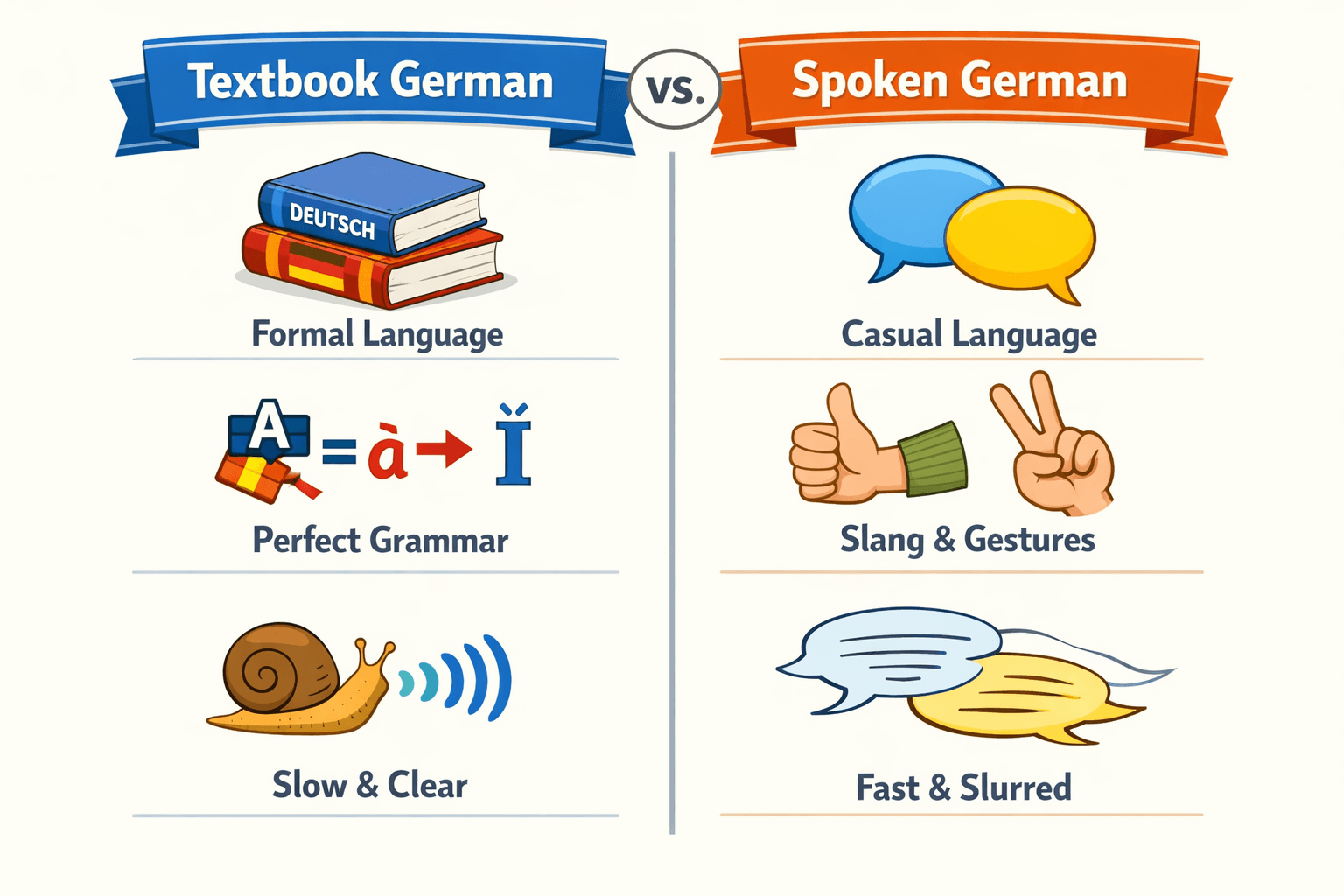
The big surprise: spoken German is not textbook German
Most people learn German from books, apps, or courses. These teach clear, correct, slow German.
Real Germans don't talk like that.
In everyday conversations, people:
- Speak fast
- Shorten words
- Skip sounds
- Bend grammar
- Use slang and filler words
So even if you "know" German, your brain hasn't learned how German sounds in real life. This is why learners struggle to understand German when native speakers speak casually.
That's why many learners feel like they're learning two languages:
- German on paper
- German in real conversations
Why German sounds so different when people speak
1. Germans squeeze words together
In real speech, words melt into each other.
For example:
- "Kannst du" often sounds like "kannste"
- "Hast du" becomes "haste"
Your brain looks for the textbook version but it hears something else.
2. Small words change everything
German uses tiny words like doch, mal, eben, ja, halt.
They don't translate directly, but they change tone and meaning.
Example:
- "Komm" = come
- "Komm mal" = come for a moment (softer, friendlier)
If you don't recognize these words, conversations feel confusing or flat.
3. Slang and expressions aren't logical
Some German phrases make no sense if you translate them word by word.
Example:
- "Hast du 'nen Vogel?"
- Literal meaning: "Do you have a bird?"
- Real meaning: "Are you crazy?"
You won't find many of these in grammar books; you learn them by hearing them used.
4. Dialects change everything
German sounds very different depending on the region.
German from Berlin, Bavaria, Austria, and Switzerland can feel like different languages. Even native Germans sometimes struggle with each other.
So if you learned "standard German," real-life speech can still shock you.
5. Reading and listening are different skills
Reading helps you understand meaning. Listening helps you recognize sounds.
Many learners read well but don't listen enough. Without listening practice, your brain can't keep up with real speech, even if you know the words.
How to actually understand German (for real)
Here's what actually works, even if you're busy.
1. Mute the show (read the subtitles out loud)
Pick a short scene with German subtitles. Mute the audio and read the subtitles out loud as if you are the speaker.
This feels silly and that's why it works. It trains rhythm, sentence flow, mouth movement, and timing without the pressure of understanding everything perfectly.
Five minutes a day is enough.
2. Read aloud (often and on purpose)
Silent reading helps comprehension. Reading out loud trains your mouth.
Children's books, graded readers, or short articles are ideal. When you read aloud, your mouth learns German sound shapes before real conversations force you to use them under pressure.
Think of it as rehearsal for speaking.
3. Do short transcription drills
Take 30-60 seconds of native German audio. Listen carefully and write down exactly what you hear.
Then check the transcript.
This forces your ear to notice:
- Swallowed sounds
- Shortened words
- Missing endings
It's uncomfortable, slow, and extremely effective.
4. Shadow short clips (copy speakers immediately)
Play a short sentence and repeat it immediately after the speaker, matching speed and rhythm.
Don't aim for perfection, aim for flow.
Shadowing trains natural intonation and helps German syllables stop sounding strange or "choppy" in your head.
5. Practice phone calls (deliberately)
Phone calls remove facial expressions, lip reading, and context clues. That's why they feel brutal.
Practice short role-play calls:
- Asking for information
- Booking an appointment
- Confirming details
Repeat them until they feel boring. Real calls are shock therapy and one of the fastest ways to improve listening.
6. Don't fear English as a bridge (use it strategically)
If you forget a word mid-conversation, use the English word and keep going.
Stopping breaks flow. Flow matters more than accuracy.
Later, practice replacing that English placeholder with the German word. Flow first. Perfection later.
The truth about understanding German
You're not failing at German.
You're just at the stage where grammar is no longer the problem. Listening is the missing piece.
Once you train your ears the same way you trained grammar, you'll start to understand German naturally.
One day, you'll notice something surprising: you're not translating anymore. You're just... understanding.
And that's when German finally feels real.