Learn Spanish With Flashcards Using Spaced Repetition
Build a simple flashcard system that actually works. Learn the manual spaced repetition method to make Spanish vocabulary stick.
Published January 20, 2026 · By Nuru HasanovLearning a new language often feels like a losing battle against your own memory. You learn ten new Spanish words today, but by next week, you only remember three. The problem isn't your memory; it's how you are reviewing.
Spaced repetition is a method designed to interrupt the forgetting curve. Instead of reviewing the same easy words repeatedly, you focus your energy on the words you are about to forget. When you successfully remember something, you wait longer before reviewing it again.
You do not need complex technology to apply this principle. You can build a highly effective, manual spaced repetition system using standard index cards and a box. This method requires discipline, but it ensures that Spanish vocabulary gets firmly embedded in your long-term memory.
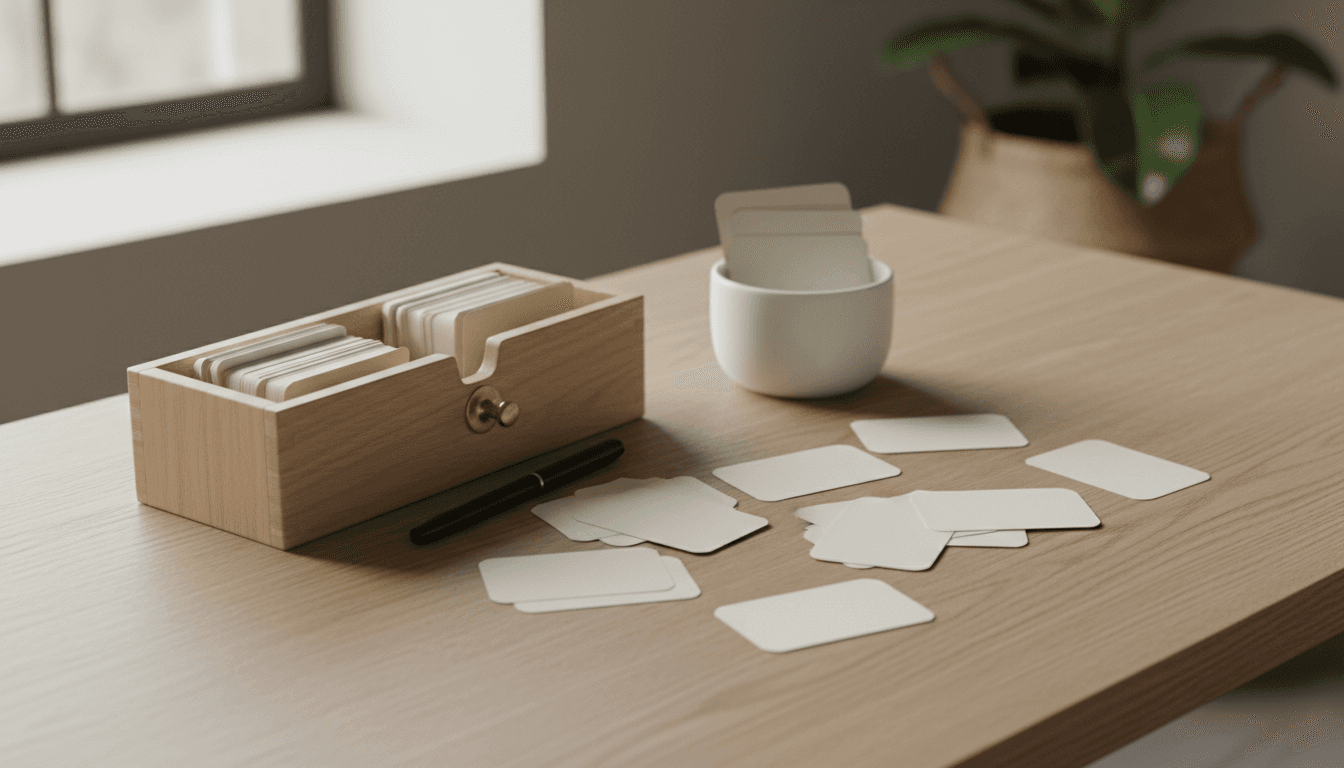
The Setup
To begin, you need physical supplies.
-
Index Cards: Start with a pack of 300-500 blank cards.
-
A Storage Box: A shoebox or an index card file box works perfectly.
-
Dividers: Create five dividers (pieces of cardboard act as good separators) to place inside the box. Label these dividers: Section 1, Section 2, Section 3, Section 4, and Section 5.
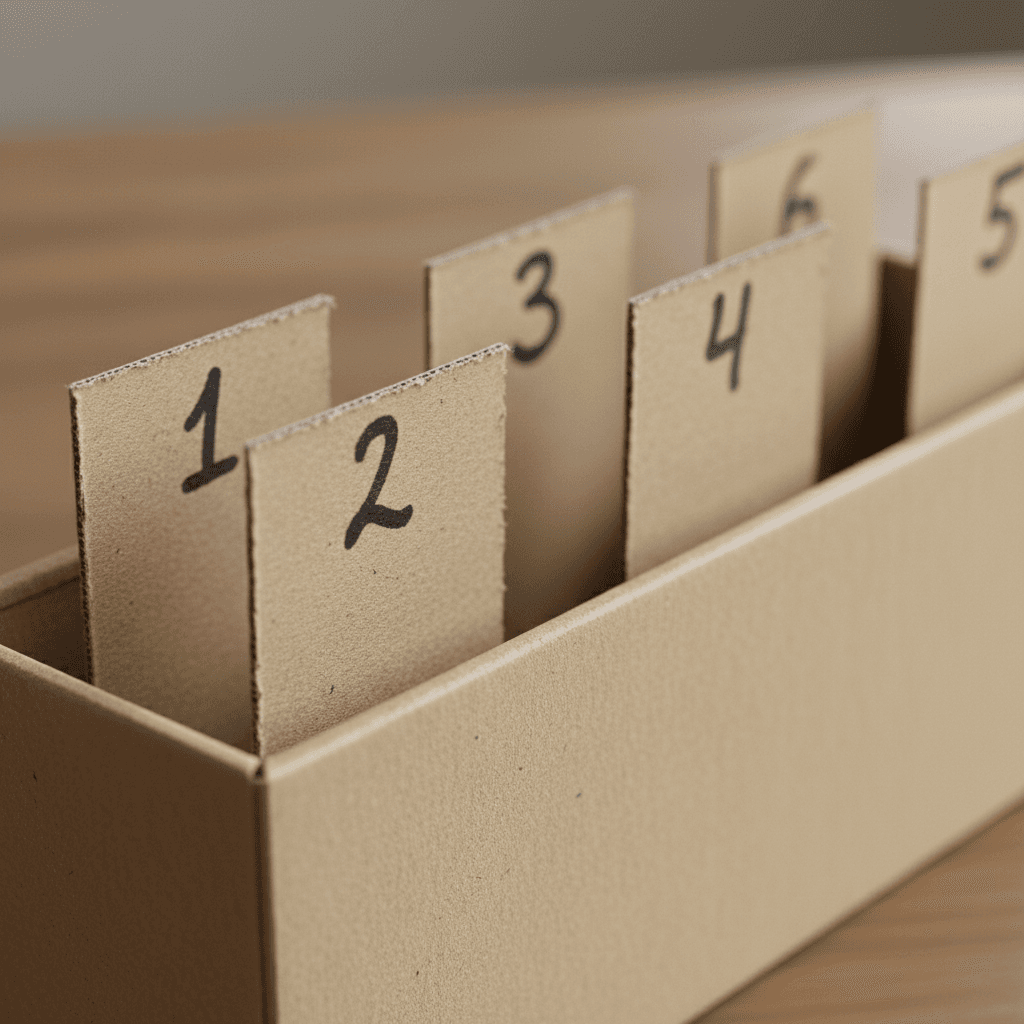
The Review Schedule
The system works by organizing cards into these five sections based on how well you know them. New cards always start in Section 1.
Each section has a different review frequency:
-
Section 1: Review every day.
-
Section 2: Review every 3 days.
-
Section 3: Review once a week.
-
Section 4: Review every two weeks.
-
Section 5: Review once a month.
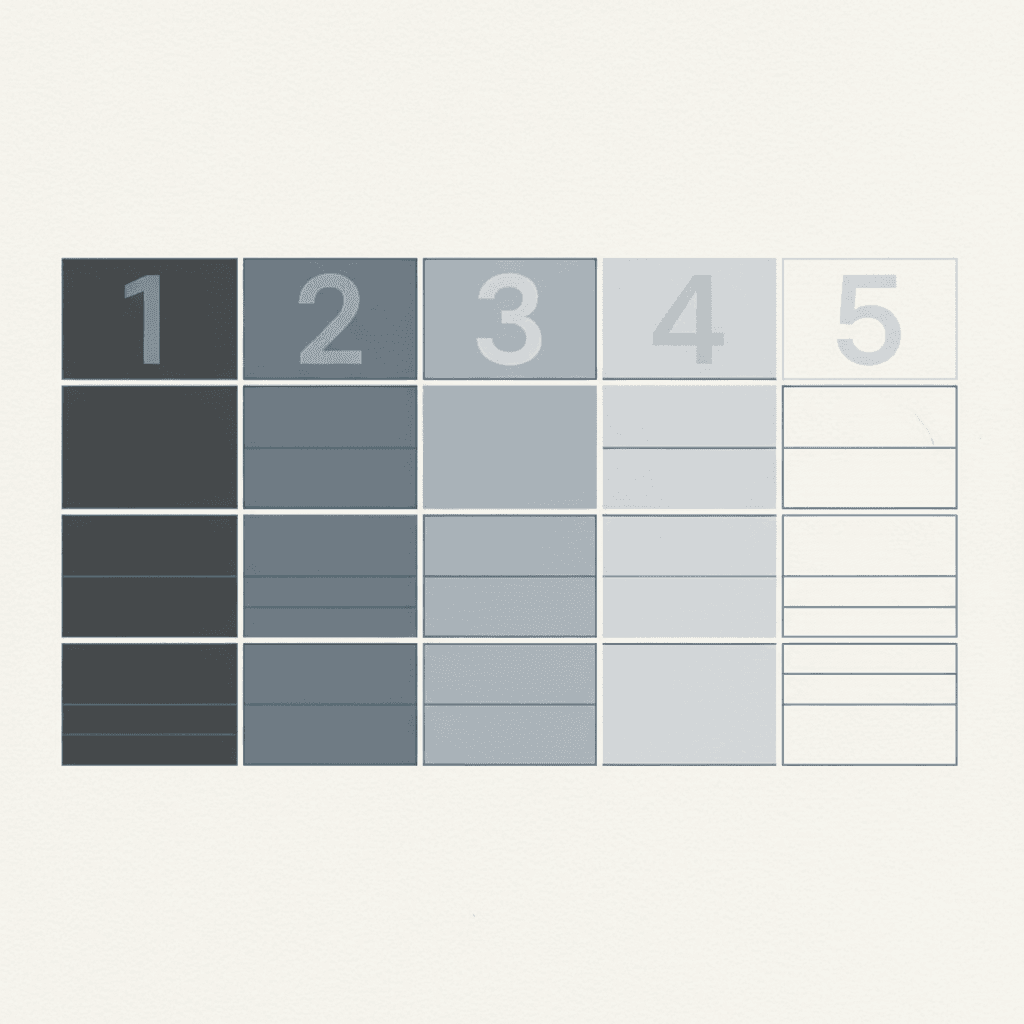
The Rules of Movement
The effectiveness of this system relies on strict adherence to two rules during your review sessions.
Rule 1: Progression If you pick up a card, say the Spanish translation correctly and without hesitation, you move that card forward to the next section behind the divider (e.g., move it from Section 1 to Section 2). This signifies that you know the word well enough to wait longer before seeing it again.
Rule 2: Regression If you pick up a card and cannot remember the Spanish translation, give the wrong answer, or have to struggle for several seconds to recall it, the card must go all the way back to Section 1.
It does not matter if the card was previously in Section 4 or 5. If you forgot it, you must restart the process for that specific word. This ensures you re-learn it thoroughly.
Creating Effective Spanish Cards
A common mistake is creating flashcards with isolated words. To speak Spanish effectively, you need context on your cards.
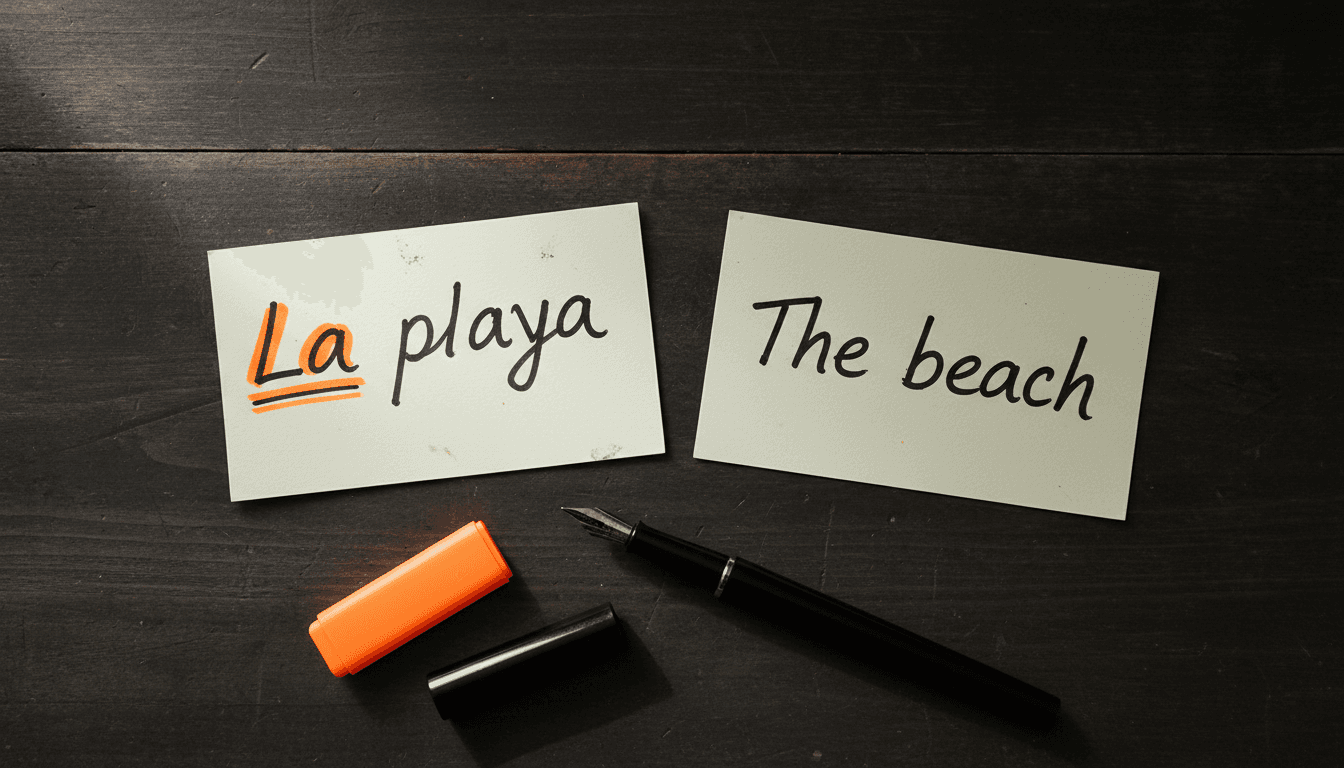
Nouns require gender Spanish nouns are masculine or feminine. Learning the noun without knowing its gender is only doing half the job. Always include the definite article (el or la) on the Spanish side.
-
Front (English): The beach
-
Back (Spanish): La playa
Verbs require sentences Knowing the dictionary definition of a verb isn't as useful as knowing how to conjugate it in a sentence. Use short phrases to provide context.
-
Front (English): We speak Spanish.
-
Back (Spanish): Nosotros hablamos español.
The Daily Routine
Consistency is essential. Sit down with your box daily. Check your schedule to see which sections are due for review. Section 1 will be due every day, while other sections will rotate in.
Pick up a card, look at the English side, and speak the Spanish translation aloud clearly. Flip the card to verify your answer. Based on the result, move the card forward one section or back to Section 1. Repeat this until you have cleared all the cards due for that day.
Starter List: Your First 20 Cards
If you are a beginner, do not overthink your first batch. Create these 20 cards immediately to populate Section 1.
Essentials & Phrases
- Front: Yes / Back: Sí
- Front: No / Back: No
- Front: Hello / Back: Hola
- Front: Please / Back: Por favor
- Front: Thank you / Back: Gracias
- Front: I don't understand / Back: No entiendo
- Front: Where is the bathroom? / Back: ¿Dónde está el baño?
Nouns (With Articles)
- Front: The water / Back: El agua
- Front: The bread / Back: El pan
- Front: The house / Back: La casa
- Front: The money / Back: El dinero
- Front: The man / Back: El hombre
- Front: The woman / Back: La mujer
Verbs (First Person Forms)
- Front: I am (name/identity) / Back: Yo soy
- Front: I am (location/mood) / Back: Yo estoy
- Front: I have / Back: Yo tengo
- Front: I want / Back: Yo quiero
- Front: I go / Back: Yo voy
- Front: I like / Back: Me gusta
- Front: I can / Back: Yo puedo