Fastest Way to Learn German: The Essential Vocabulary Cheat Sheet
Stop memorizing vocabulary you'll never use. To reach conversational fluency fast, you need to ignore 95% of the language and focus on the 'Cheat Codes'. Here is the full list.
Published January 25, 2026 · By Nuru HasanovIf you want to speak German in 3 months, you need to cheat.
Right now, most beginners are wasting their time learning how to say "The duck eats the apple." Stop it. You are treating the language like a buffet, trying to eat everything at once. You are going to make yourself sick, and you are going to quit.
The "Fastest Way" isn't about how fast you study; it's about how much you ignore.
Here is the cold, hard truth: The German language has roughly 150,000 words. But 95% of them are garbage for a beginner. You do not need to know the word for "platypus" to order a beer.
The Pareto Principle (80/20 rule) applies here perfectly. The most frequent words make up roughly 80% of all daily spoken conversation.
I have split the list below into two parts:
- The "Hacks" (First 150 Words): The grammar shortcuts and high-frequency verbs you need to survive. Memorize these first.
- The "Archive" (The Remaining 550): The raw vocabulary list to fill out your dictionary.
Do not scan this list. Memorize it.
PART 1: THE HACKS (The First 150)
These are the engines of your sentences. Without these, the rest of the list is useless.
Phase 1: The Engine (Verbs & Grammar Hacks)
The "Modal" Cheat Code
Stop memorizing conjugation tables for 50 different verbs. It’s a waste of time. You only need to learn these four Modal verbs.
The Hack: When you use a Modal verb, the second verb gets thrown to the very end of the sentence in its original form (Infinitive). You don't have to conjugate the second verb.
- Müssen (must/have to)
- Können (can/able to)
- Wollen (want)
- Dürfen (allowed to)
Example: "Ich muss ... nach Hause gehen." (I must ... home go).
The Big Three
These three verbs do 90% of the heavy lifting. Drill them until they hurt.
- Sein (to be)
- Haben (to have)
- Werden (to become)
High-Utility Actions
Forget words like "ponder." You need to survive.
Gehen (go/walk), Essen (eat), Trinken (drink), Schlafen (sleep), Sehen (see), Hören (hear), Sagen (say), Denken (think), Kommen (come), Geben (give), Nehmen (take), Arbeiten (work), Wissen (know a fact), Kennen (know a person/place), Finden (find), Suchen (search), Brauchen (need), Benutzen (use).
The "Machen" Hack
- Machen (to make/do).
- Why it's a hack: You can "Machen" almost anything in German. Make a photo (
Foto machen), make a party, make a vacation. When in doubt, useMachen.
- Why it's a hack: You can "Machen" almost anything in German. Make a photo (
Phase 2: The Glue (Connecting Words)
You can't speak with just nouns. These words connect your thoughts.
- Weil (because) - Use this to explain yourself.
- Aber (but) - Essential for complaining.
- Und (and)
- Oder (or)
- Obwohl (although) - Makes you sound instantly sophisticated.
- Wenn (if/when)
- Dann (then)
- Auch (also/too)
- Nur (only)
- Sehr (very)
- Vielleicht (maybe) - The ultimate escape hatch.
- Natürlich (naturally/of course)
- Genau (exactly) - Say this every 30 seconds to pretend you are listening.
Phase 3: Survival & Questions
If you get lost, these are the only words that will actually save you.
- Wer (who), Was (what), Wo (where), Wann (when), Warum (why), Wie (how).
- Entschuldigung (Excuse me / Sorry)
- Hilfe (Help)
- Bitte (Please)
- Danke (Thank you)
- Dingsbums (Thingy/Whatchamacallit) - Use this when you forget a noun.
- "Wie heißt das auf Deutsch?" (What is that called in German?)
- "Ich verstehe nicht" (I don't understand)
- "Sprechen Sie Englisch?" (Do you speak English?)
Phase 4: The Core Nouns
Grouped by what you actually use daily.
- The "Gender" Cheat: Ends in -ung/-heit/-keit = Die (Feminine). Ends in -chen = Das (Neutral).
- Time: Tag (day), Woche (week), Monat (month), Jahr (year), Stunde (hour), Minute (minute), Uhr (o'clock), Zeit (time), Heute (today), Morgen (tomorrow), Gestern (yesterday), Jetzt (now).
- People: Mann (man), Frau (woman), Kind (child), Freund (friend), Leute (people), Eltern (parents), Familie (family).
- Places: Stadt (city), Straße (street), Haus (house), Bahnhof (train station), Flughafen (airport), Hotel (hotel), Krankenhaus (hospital), Büro (office), Schule (school), Laden (shop), Zimmer (room), Toilette (toilet).
- Food: Wasser (water), Bier (beer), Brot (bread), Fleisch (meat), Gemüse (vegetable), Kaffee (coffee), Rechnung (bill).
- Tech/Objects: Geld (money), Handy (mobile phone), Schlüssel (key), Ticket (ticket), Tisch (table), Stuhl (chair), Bett (bed), Auto (car).
Phase 5: Adjectives (The Describers)
Keep it binary. Learn the opposites.
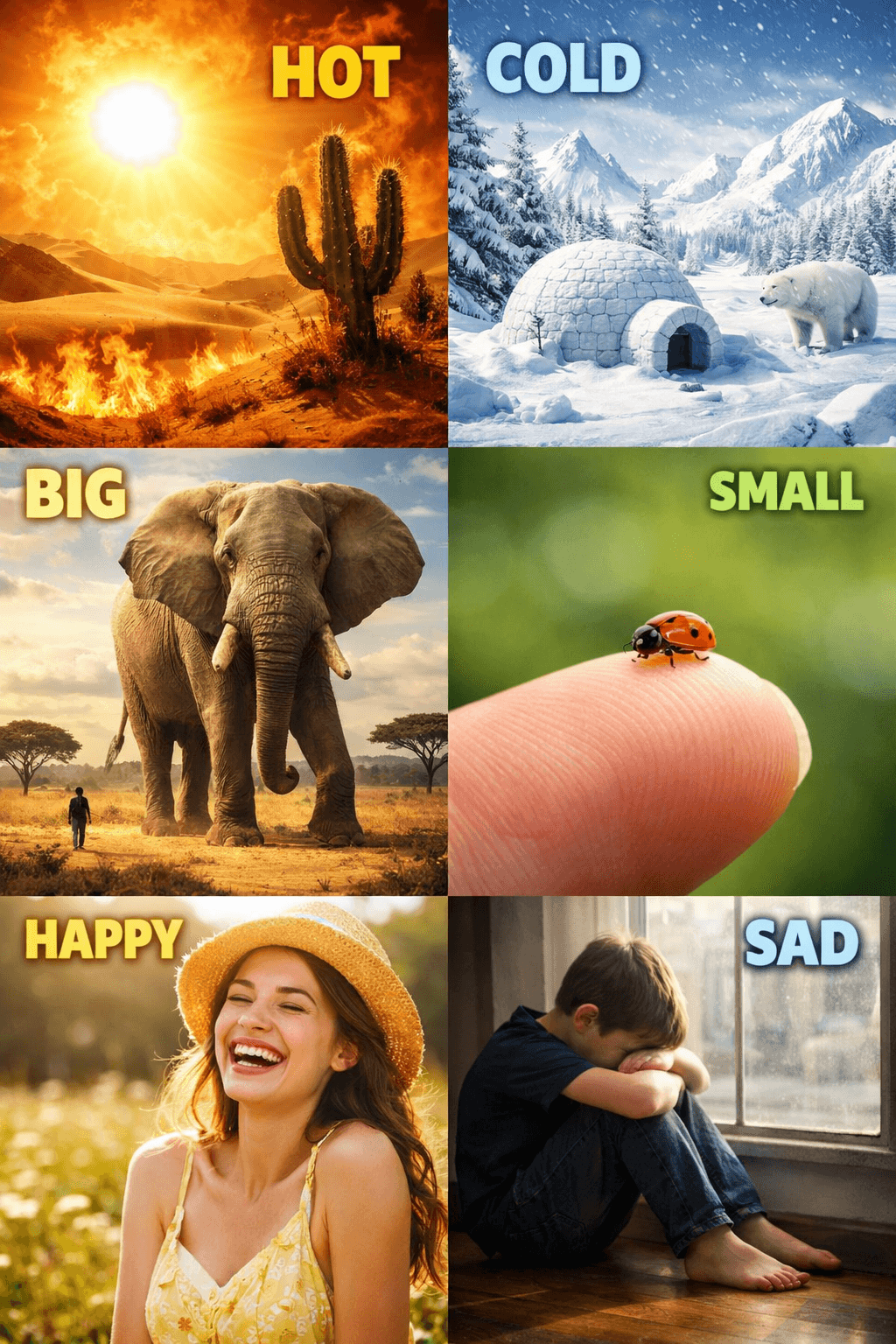
- Groß / Klein (Big / Small)
- Gut / Schlecht (Good / Bad)
- Heiß / Kalt (Hot / Cold)
- Viel / Wenig (Much / Little)
- Einfach / Schwer (Easy / Hard)
- Offen / Geschlossen (Open / Closed)
- Schnell / Langsam (Fast / Slow)
- Richtig / Falsch (Right / Wrong)
- Teuer / Billig (Expensive / Cheap)
- Schön (Beautiful/Nice)
- Lecker (Tasty)
- Wichtig (Important)
PART 2: THE ARCHIVE (The Remaining 550)
Once you master Part 1, use this list to fill in the gaps. These are sorted by category.
Animals
 Hund (dog), Katze (cat), Fisch (fish), Vogel (bird), Kuh (cow), Schwein (pig), Maus (mouse), Pferd (horse), Flügel (wing), Tier (animal).
Transportation
 Zug (train), Flugzeug (plane), Lastwagen (truck), Fahrrad (bicycle), Bus (bus), Boot (boat), Schiff (ship), Reifen (tire), Benzin (gasoline), Motor (engine), Fahrkarte (ticket), Transport (transportation).
Extended Locations
 Wohnung (apartment), Brücke (bridge), Restaurant (restaurant), Bauernhof (farm), Gericht (court), Universität (university), Klub (club), Bar (bar), Park (park), Lager (camp), Theater (theater), Bibliothek (library), Kirche (church), Markt (market), Land (country), Gebäude (building), Boden (ground), Raum (space), Bank (bank), Ort (location), Zentrum (center), Platz (place), Ecke (corner).
Clothing
 Hut (hat), Kleid (dress), Anzug (suit), Rock (skirt), Hemd (shirt), T-Shirt (T-shirt), Hose (pants), Schuhe (shoes), Tasche (pocket), Mantel (coat), Fleck (stain), Kleidung (clothing).
Colors
 Rot (red), Grün (green), Blau (blue), Hell (light), Dunkel (dark), Gelb (yellow), Braun (brown), Rosa (pink), Orange (orange), Schwarz (black), Weiß (white), Grau (gray), Farbe (color).
Extended People
 Sohn (son), Tochter (daughter), Mutter (mother), Vater (father), Elternteil (parent), Baby (baby), Bruder (brother), Schwester (sister), Großvater (grandfather), Großmutter (grandmother), Ehemann (husband), Ehefrau (wife), König (king), Königin (queen), Präsident (president), Nachbar (neighbor), Erwachsener (adult), Mensch (human), Opfer (victim), Spieler (player), Fan (fan), Menge (crowd), Person (person).
Jobs & Work
 Lehrer (teacher), Student (student), Anwalt (lawyer), Arzt (doctor), Patient (patient), Kellner (waiter), Sekretär (secretary), Priester (priest), Polizei (police), Armee (army), Soldat (soldier), Künstler (artist), Autor (author), Manager (manager), Reporter (reporter), Schauspieler (actor), Arbeit (job).
Society & Abstract
 Religion (religion), Himmel (heaven), Hölle (hell), Tod (death), Medizin (medicine), Dollar (dollar), Ehe (marriage), Hochzeit (wedding), Team (team), Rennen (race), Ethnizität (ethnicity), Sex (sex), Mord (murder), Gefängnis (prison), Technologie (technology), Energie (energy), Krieg (war), Frieden (peace), Angriff (attack), Wahl (election), Zeitschrift (magazine), Zeitung (newspaper), Gift (poison), Pistole (gun), Sport (sport), Übung (exercise), Ball (ball), Spiel (game), Preis (price), Vertrag (contract), Droge (drug), Zeichen (sign), Wissenschaft (science), Gott (God), Gesellschaft (society), Politik (politics).
Art & Music
 Band (band), Lied (song), Instrument (instrument), Musik (music), Film (movie), Kunst (art).
Extended Food & Drink
 Ei (egg), Käse (cheese), Suppe (soup), Kuchen (cake), Huhn (chicken), Schweinefleisch (pork), Rindfleisch (beef), Apfel (apple), Banane (banana), Orange (orange), Zitrone (lemon), Mais (corn), Reis (rice), Öl (oil), Samen (seed), Messer (knife), Löffel (spoon), Gabel (fork), Teller (plate), Tasse (cup), Zucker (sugar), Salz (salt), Flasche (bottle), Essen (food), Mahlzeit (meal).
Home & Interior
 Fenster (window), Tür (door), Schlafzimmer (bedroom), Küche (kitchen), Badezimmer (bathroom), Bleistift (pencil), Stift (pen), Foto (photograph), Seife (soap), Buch (book), Seite (page), Farbe (paint), Brief (letter), Notiz (note), Wand (wall), Papier (paper), Fußboden (floor), Decke (ceiling), Dach (roof), Schwimmbad (pool), Schloss (lock), Telefon (telephone), Garten (garden), Hof (yard), Nadel (needle), Schachtel (box), Geschenk (gift), Karte (card), Ring (ring), Werkzeug (tool).
Electronics
 Uhr (clock), Lampe (lamp), Ventilator (fan), Netzwerk (network), Computer (computer), Programm (program), Laptop (laptop), Bildschirm (screen), Kamera (camera), Fernseher (television), Radio (radio).
Body
 Kopf (head), Hals (neck), Gesicht (face), Bart (beard), Haar (hair), Auge (eye), Mund (mouth), Lippe (lip), Nase (nose), Zahn (tooth), Ohr (ear), Träne (tear), Zunge (tongue), Rücken (back), Zeh (toe), Finger (finger), Fuß (foot), Bein (leg), Arm (arm), Schulter (shoulder), Herz (heart), Blut (blood), Gehirn (brain), Knie (knee), Schweiß (sweat), Krankheit (disease), Knochen (bone), Stimme (voice), Haut (skin), Körper (body).
Nature
 Meer (sea), Ozean (ocean), Fluss (river), Berg (mountain), Regen (rain), Schnee (snow), Baum (tree), Sonne (sun), Mond (moon), Welt (world), Erde (Earth), Wald (forest), Himmel (sky), Pflanze (plant), Wind (wind), Erde (soil/earth), Blume (flower), Tal (valley), Wurzel (root), See (lake), Stern (star), Gras (grass), Blatt (leaf), Luft (air), Sand (sand), Strand (beach), Welle (wave), Feuer (fire), Eis (ice), Insel (island), Hügel (hill), Hitze (heat), Natur (nature).
Materials
 Glas (glass), Metall (metal), Plastik (plastic), Holz (wood), Stein (stone), Diamant (diamond), Ton (clay), Staub (dust), Gold (gold), Kupfer (copper), Silber (silver), Material (material), Eisen (iron).
Math & Measurements
 Meter (meter), Zentimeter (centimeter), Kilogramm (kilogram), Zoll (inch), Fuß (foot), Pfund (pound), Hälfte (half), Kreis (circle), Quadrat (square), Temperatur (temperature), Datum (date), Gewicht (weight), Rand (edge), Entfernung (distance), Zahl (number), Größe (size), Menge (amount).
Misc & Directions
 Oben (top), Unten (bottom), Seite (side), Vorne (front), Hinten (back), Außen (outside), Innen (inside), Hoch (up), Runter (down), Links (left), Rechts (right), Gerade (straight), Norden (north), Süden (south), Osten (east), Westen (west), Richtung (direction), Mitte (center), Zwischen (between).
Time & Seasons
 Sommer (summer), Winter (winter), Frühling (spring), Herbst (autumn). Null (0), Eins (1), Zwei (2)... [and all time units].
Final Warning
Do not just bookmark this page. Bookmarks are where dreams go to die.
Start with Part 1. Write the words on your hand. Use them today.
If you do that, you will be conversational in 2.5 months. If you don't, you'll still be looking for "shortcuts" next year.
Get to work.